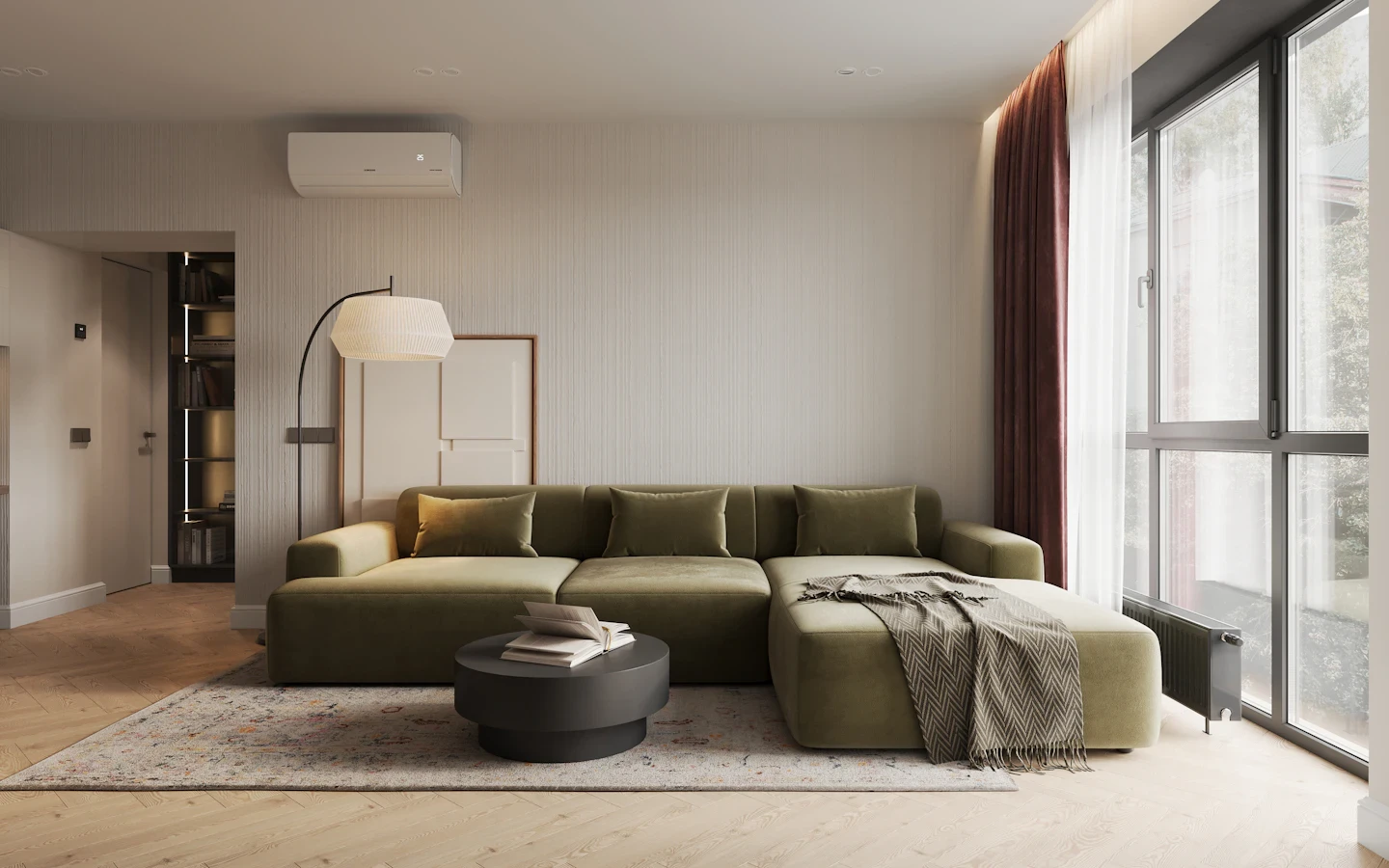
Illustrative photograph
The cost of a 3 BHK interior project cannot be established from the bedroom count alone. A useful budget starts with the work you want completed, the condition of the flat, the quantity of fitted furniture and the specifications you choose. Before comparing prices, establish whether each quotation covers the same finished home.
Roy Constructions focuses on complete residential projects with budgets of ₹15 lakh and above. That is our project-selection range, not a claim that every Kolkata 3 BHK needs that amount or that every scope can be delivered for it.
Separate your budget into five decisions
1. What stays and what changes?
List the flooring, doors, sanitary fixtures, electrical points and existing finishes you plan to retain. Identify what must be removed or altered. A new apartment with usable finishes and a renovation requiring substantial preparation need different estimates.
2. How much fitted work do you need?
Describe the kitchen cabinets, wardrobes, study units, storage and other joinery room by room. Record their dimensions and internal arrangement. “Three wardrobes” leaves important questions unanswered: their size, drawer count, doors, fittings and finish may differ considerably.
3. What is the agreed specification?
Ask for identifiable products or clear specifications for the board, finish, hardware, fittings and installation. An upgrade should show what changes and which quantities it affects. A label such as “premium” is not a substitute for that description.
4. Which items are outside the contractor’s scope?
Loose furniture, appliances, decorative lights, curtains and specialist systems may be purchased separately. Record who supplies and installs each item. A missing item still belongs in your overall home budget even if it is absent from the interior contract.
5. Which allowances are unresolved?
Separate confirmed work from provisional selections and uncertain site conditions. Ask what information will turn each allowance into a firm item. Keep a clearly identified reserve for decisions that have not yet been made; its size should reflect the uncertainty in your particular project.
Use this budget worksheet before comparing totals
Work group | Quantity or basis | Specification status | Included in quote? | Supplied by whom? |
|---|---|---|---|---|
Civil alterations and preparation | Describe the work | Confirmed / provisional | Yes / no / unclear | Contractor / owner |
Kitchen and wardrobes | Dimensions and configuration | Confirmed / provisional | Yes / no / unclear | Contractor / owner |
Electrical and plumbing changes | Points and agreed scope | Confirmed / provisional | Yes / no / unclear | Contractor / owner |
Ceilings, flooring and finishes | Measured areas | Confirmed / provisional | Yes / no / unclear | Contractor / owner |
Loose items and appliances | Item schedule | Confirmed / provisional | Yes / no / unclear | Contractor / owner |
Design, logistics and taxes | Expressly stated basis | Confirmed / provisional | Yes / no / unclear | Named party |
Why a lower contract total may not mean a lower overall spend
One quotation may include preparation and installation while another leaves them to you. Compare the contracted work together with separately purchased items, unresolved allowances and stated charges. The purpose is to see your likely total commitment, not just the lowest number on the first page.
If the budget is too high, revise the scope consciously. Identify essential functional work, optional finishes and elements that can be postponed. Ask for a revised specification and estimate rather than an unexplained discount on the same description.
Start with the floor plan and your priorities
Prepare a short brief listing the rooms, intended use, retained items, budget and possession date. Read our guide to comparing interior quotations, then explore Roy Constructions’ residential interior services to discuss your project.


